
Mindful Walking: A Path to Psychological and Physiological Well-being

Overview of Mindful Walking
- Promoted by Harvard University: The Center of Thich Nhat Hanh for Full Attention in Public Health, under the Harvard T.H. Chan School of Public Health, emphasizes the practice of mindful walking as part of their healthy aging initiatives.
- Combination Approach: Mindful walking is endorsed as a blend of moderate physical activity and meditation.
- Accessibility: This practice is lauded for its ease and flexibility, capable of being performed anytime, anywhere, offering a broad spectrum of health benefits.
Evidence-Based Health Advantages
- Reduced Health Risks: A daily practice of just 21 minutes has shown to decrease heart disease risks by 30%, and similarly lower the chances of developing diabetes and cancer.
- Enhanced Mental Health: Mindful walking is proven to significantly lower stress levels and bolster overall mental well-being.
.
Harvard’s Recommendations for Practice
- Technique: Focus on conscious breathing, light steps, and staying present during the walk.
- Daily Life Integration: Encourages incorporating these elements into everyday routines for long-term health benefits.
Forest Bathing & Mindful Walking Connection
- Origin: Forest bathing, known as shinrin-yoku in Japan, emerged as a remedy for overwhelmed tech workers, aiming to reconnect them with nature.
- Sensory Engagement: It involves immersing oneself in natural surroundings and mindfully engaging all senses, which aligns with the principles of mindful walking.
Mindful walking and Science
- Mental and Physical Rewards: Studies affirm the positive effects of mindfulness-based stress reduction methods, like mindful walking.
- Adaptability: While forest bathing necessitates a natural setting, mindful walking can be practiced in any environment while maintaining a mindful presence.
Essence of Mindfulness
- Mental Location Over Physical: The core of mindfulness lies not in the physical surroundings but in the mental state of the individual.
Introducing Mindful Walking
- Reframing Walking: Often seen as a fallback to vehicular transport, walking is a fundamental human trait, offering a unique way to engage with the world.
- Awareness Enhancement: Mindful walking shifts focus from the endpoint to the experience, turning an ordinary route into a mindful journey.
Guide to Mindful Walking
- Sensory Awareness: Pay attention to bodily sensations, the environment, and fully open your senses.
- Simplicity and Accessibility: Requires no special tools or settings and easily integrates into daily life.

Walking as Innate Exercise
- Evolutionary Perspective: Humans have evolved for endurance walking, featuring specialized traits for this purpose.
- Antidote to Sedentariness: In contrast to modern sedentary lifestyles, walking serves as an accessible form of exercise with profound mental and physical health impacts.
Mindfulness in Everyday Life
- Transforming Routine: Regular walks become opportunities for mindfulness, turning mundane trips into restorative experiences.
- Cognitive Clarity: Walking offers a space for contemplation and can act as a mental refresh during daily activities.
Remember, mindful walking is less about the stride and more about the stance of the mind. Every step taken with mindfulness brings you closer to a state of peaceful awareness, regardless of the path you tread.
The Sedentary Lifestyle Challenge
- Modern Habitats: Our contemporary lives are often defined by prolonged periods seated in front of screens, a stark contrast to our evolutionary design.
- Evolutionary Design for Endurance: Research by Dennis Bramble and Daniel Lieberman highlights that humans are biologically structured for endurance, with unique features shaping our existence.
- Detrimental Effects of Inactivity: Lack of physical activity leads to substantial negative outcomes, such as muscle atrophy, obesity, cardiovascular issues, and mental health decline.
- Simplicity of Walking: It’s an accessible form of exercise, requiring no special training, gear, or starting fitness level, known to clear the mind and provide time for reflection.
Initiating Mindful Walking
- Goal of Mindfulness: Achieve a heightened state of awareness while navigating your environment.
- Awareness Over Destination: It encourages a shift in focus from where you’re going to a deepened sense of the present, fostering internal and external awareness.
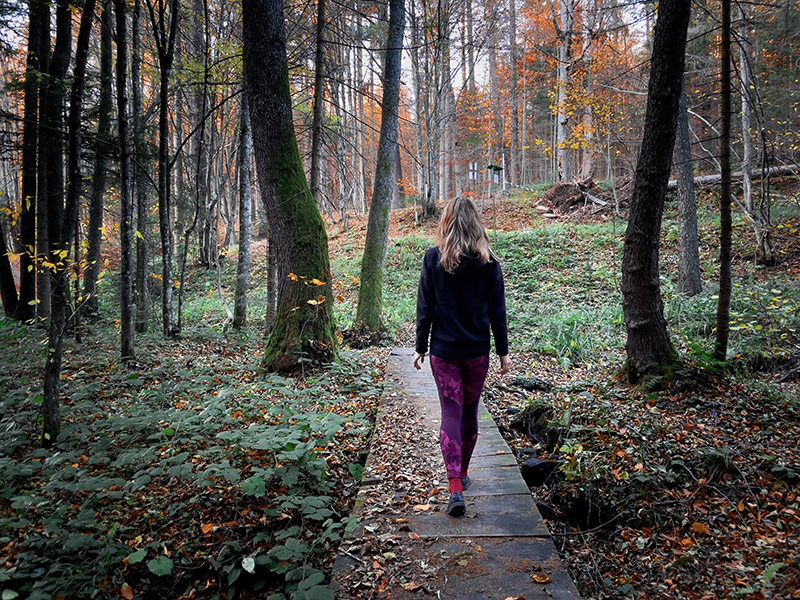
Steps to Mindful Walking
Preparation: Setting the Scene
- Choose a Tranquil Spot: Whether it’s a garden, urban park, rural trail, or bustling avenue, any location can serve as your walking ground.
- Dress for Comfort: Opt for attire and footwear that won’t distract from your mindfulness.
- Body and Mind Alignment: Take a moment to feel your body’s weight, posture, and the grounding of your feet, breathing deeply to center your mind.
The Movement: Engaging with Each Step
- Pace with Intent: Start walking slightly slower than your usual speed, with full attention to the act.
- Mindful Walking Checklist:
- Focus on the sensation of each step, from heel to toe.
- Notice the interplay of muscles and tendons in your feet and legs.
- Be conscious of your body’s overall movements.
- Sensory Engagement:
- Listen to natural sounds like the wind or rustling leaves.
- Inhale the scent of nature, like freshly cut grass.
- Feel environmental touches, such as raindrops on your skin.
- Observe the interplay of light and shadow, reflections, and movements around you.
- Breath Awareness: Breathe naturally yet deeply, guiding wandering thoughts back to your walk and breath.
- Duration: Continue for as long as you feel comfortable and secure.
Conclusion: Absorbing the Experience
- Reflection: Upon completing your walk, stand still, breathe deeply, and embrace the calmness you’ve cultivated.
Extending Mindfulness Beyond Solo Walks
- Walking Groups: For variety or safety, consider joining a walking group; research in the British Journal of Sports Medicine confirms numerous benefits of group walking for physical and mental health.
- Mindful Group Dynamics: Should you seek mindfulness in group settings, seek or establish a group with similar goals or define a personal space for meditation within the group’s activities.
The Ongoing Impact of Mindful Walking
- Scientifically Proven Benefits: Studies consistently show that mindful walking improves physical health and mental states, addressing anxiety, depression, and overall life satisfaction.
- Integrate into Daily Routines: Incorporate mindful walking into everyday tasks, like a stroll in the garden or around the block, to make it a seamless aspect of your lifestyle.
Financial and Time Investment
- Minimal Cost, Maximum Reward: Mindful walking is cost-effective, with potential time commitments offset by significant life quality improvements.
Mindfulness in Motion
- A Tangible Approach to Meditation: This active form of mindfulness helps anchor you in the present, enhancing groundedness and well-being.
Concluding Thoughts on Mindful Walking
- Beneficial for Psychological Functioning: Regular physical and mindful practice positively impacts cognition, stress reduction, and mood enhancement.
- Transference of Mindfulness: The skills developed through mindful walking can enhance other life aspects, emphasizing the journey’s value over the destination across various life domains.
My Story
In August of 2018 I started my meditation journey. In the span of almost 6 years or meditating everyday a huge transformation has happened inside of me.
I am very happy positive most of the time and joyful. I appreciate things in my day-to-day no matter how insignificant or small. I am kinder to my family and friends. I love my life things come to me easily including abundance.
Part of Joe Dispenza meditations are the walking meditations. They are quite powerful as you embody your future self your thoughts and emotions change over time and you become your future self. I have been doing the walking meditations for the past 10 months every day. ( give or take missing 3-4 days a month) My inner transformation has sped up and it is quite amazing how I can observe myself becoming the best version of myself. I also feel calmer and more peaceful inside. 😺
I usually do it in nature or on the beach early in the morning. If the weather is bad I walk inside the house. ( this works for me too.) It is so worth doing them. In the process I lost 10 pounds of weight as well which was a side bonus! 😀.
I also use noise cancelling headphones to do my walking meditations. I use a Sennheiser Headphone.
Resources
- Positive Psychology offers an extensive guide on mindful walking, detailing the steps of preparation, movement, and how to conclude the practice. Additionally, it provides scripts, audio recordings, and applications to aid in the practice, supporting individuals to improve their skills and integrate mindful walking into their daily routines for enhanced physical and mental well-being.
- www.mindful.org presents six approaches to enhance your mindful walking experience, emphasizing the integration of mindfulness with physical movement. It covers basic walking meditations, sensory walking, and appreciative walking among others, with the aim of leveraging the benefits for mental health such as alleviating mild depression and anxiety.
- www.healthline.com provides insights into how mindful walking can improve mood and boost blood flow, especially after sitting for extended periods. It suggests mindful walking as an excellent way to overcome feelings of sluggishness and to help reduce stress hormones like cortisol.
These resources can offer further detailed steps, techniques, and the science behind the practice, contributing to a comprehensive understanding of mindful walking.
Reference links
- Bramble, D. M., & Lieberman, D. E. (2004). Endurance running and the evolution of Homo. Nature, 432(7015), 345–352.
- Chen, S., Bowers, J., & Durrant, A. (2015). “Ambient walk.” Proceedings of the 2015 British HCI Conference on – British HCI. 15.
- Gotink, R. A., Hermans, K. S. F. M., Geschwind, N., De Nooij, R., De Groot, W. T., & Speckens, A. E. M. (2016). Mindfulness and mood stimulate each other in an upward spiral: A mindful walking intervention using experience sampling. Mindfulness, 7(5), 1114–1122.
Share this post :

Living Longer, Living Better: Stories of Extraordinary Lives in the Marginal Decade

Apollo Neuro: Exploring Its Impact on Mental Health and Well-being

Lion’s Mane Mushrooms
