


Epigenetics is a branch of science that explores how our environment and lifestyle choices can directly influence our genetic expression. Essentially, while the DNA you’ve inherited from your parents remains constant, various factors like diet, stress, and physical activity can alter the way those genes operate.
Think of it as having a set of musical notes—the melody changes depending on which notes are played loudly, softly, or not at all.
Understanding epigenetics might just be the key to unlocking a healthier and more vibrant later life. By recognizing which lifestyle factors can modify your genetic readout, you may be able to support your cognitive abilities, agile movement, and overall well-being as you get older.
This area of study is not just a fascinating insight into the biological crosstalk between our genes and our daily habits; it also empowers us with the knowledge to potentially sway our quality of life in a positive direction.
Fundamentals of Epigenetics
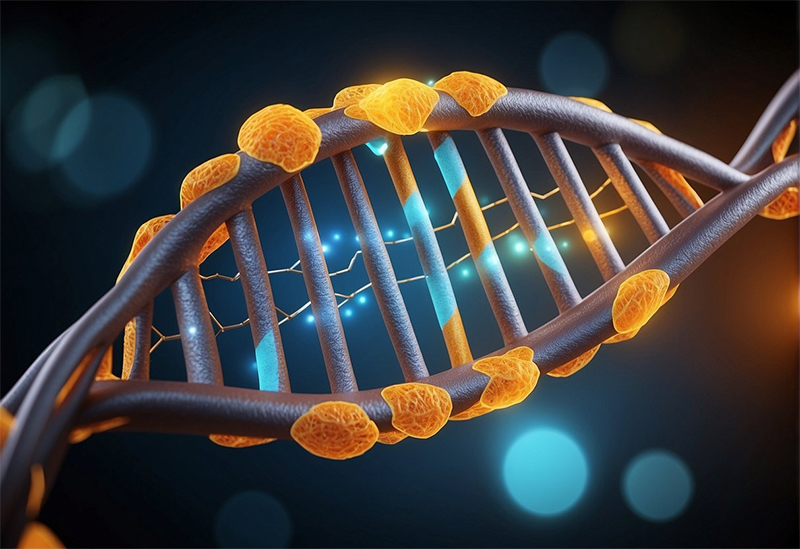
exploring the essentials of epigenetics, one begins to understand how genes and their expressions—as well as the body’s overall functioning—are influenced without alterations to the underlying DNA sequence.
DNA and Proteins
DNA, the blueprint of biological instructions, works hand in hand with proteins to coordinate the function of cells.
Proteins, including histones, bind to DNA, affecting how tightly or loosely it’s wound. This winding is more than just structural; it also controls which genes are available for use.
If your DNA is a library of life’s instructions, proteins are like the librarians who organize the shelves, making sure that only the necessary books—genes—are displayed for your cells to read and use.
Epigenetic Mechanisms
Several mechanisms act on DNA and histones to regulate gene expression.
DNA methylation is a process where methyl groups are added to the DNA molecule, often leading to a reduction in gene activity.
Conversely, histone modification typically involves adding or removing chemical groups, fine-tuning the accessibility of genes for creating proteins.
These modifications constitute your epigenome, a dynamic layer that tells your genome which genes to turn on or off.
As you age, keeping your epigenome in good shape through healthy habits can be key to maintaining your cognitive function and physical mobility, and may even influence how your body manages aging.
Epigenetics and Health
his study area is not just a fascinating insight into the biological crosstalk between our genes and our daily habits; it also empowers us with the knowledge to sway our quality of life in a positive direction potentially.
Epigenetic Inheritance
Epigenetic inheritance refers to the way in which genes are switched on and off in offspring, based on the parents’ experiences and environments.
Imagine it like a set of lights in a house that can be dimmed or brightened; the house’s structure stays the same, but the atmosphere changes.
Imprinting is a key part of this process where certain genes are stamped either maternal or paternal, influencing an embryo’s development in significant ways.
Think of it as a parental signature of sorts, which can affect things like growth and metabolism.
Transgenerational Changes
Transgenerational epigenetic inheritance introduces the idea that some of these epigenetic “settings” can be transmitted across multiple generations.
For example, if your grandparents lived through a period of scarcity, it might influence your own phenotype—or the traits that are actually visible and affect you day-to-day.
This could impact everything from body size to how you handle stress.
It’s a crucial link in understanding how certain inherited behaviors crop up across generations, sometimes despite new, different environments faced by each generation.
Emerging Research and Techniques
The field of epigenetics is rapidly advancing, with new research techniques illuminating how our lifestyles might imprint on our genetic material. These scientific advancements are giving us fascinating insights into the biological mechanisms that could influence our health and longevity.
Epigenomic Mapping
Epigenomic mapping is akin to drawing a detailed map of a vast and previously uncharted city.
Scientists are now able to chart the presence of methyl groups and other chemical modifications across the genome. This is crucial for understanding how genes are turned on and off.
One cutting-edge technique involves looking closely at CpG sites and CpG islands – regions rich in genetic information where DNA methylation patterns often occur.
By clarifying these patterns, researchers can understand how hypermethylation or demethylation can influence cellular differentiation – an important process that determines whether a stem cell becomes a bone cell, a brain cell, or any other cell type.
In biomedicine, these maps can reveal the epigenetic landscape underlying complex diseases and might even guide interventions for conditions related to aging.
For instance, 3D genome mapping techniques are uncovering how the physical structure of DNA within the cell nucleus affects gene expression and chromatin remodeling – think of it as understanding how the organization of the city affects traffic flow.
Role of Non-Coding RNAs
Moving beyond DNA, researchers are uncovering the roles of what was once considered ‘junk’ in our genetic code – the non-coding RNAs.
These include microRNAs, which, it turns out, aren’t junk at all. They hold the reins to genetic control in many ways.
They act as messengers that can increase or decrease the production of proteins from our genes. This influences everything from trauma recovery to how our bodies respond to nutrition.
The epigenetics community is excited about the therapeutic potentials here. By manipulating these tiny molecules, scientists hope to master the regulation of genes associated with age-related conditions.
It’s a leap forward in understanding how epigenetic factors can be adjusted.
This manipulation could potentially help maintain cognitive function, encourage healthier aging, and support mobility as we grow older.


